Real Estate & Urban Land Economics

The Ph.D. program in real estate prepares individuals for careers in research and teaching at the university level. The program is highly quantitative and provides a strong foundation in financial and economic theory as well as mathematical statistical techniques. Through a program of elective courses and dissertation research, students specialize in particular areas of real estate economics and finance. Typically, at least four years is required between the time a student enters the program and the dissertation is completed. Individuals interested in research positions at non-academic financial institutions may find the Quantitative Masters in Finance (QMF) program offered by the Finance Department more appropriate to their needs than the Ph.D. program.

Background Courses

  • Three semesters of calculus, two semesters of mathematical statistics, one semester of real analysis, and one semester of linear algebra.
  • Introductory course work covering microeconomics and macroeconomics
  • A course in real analysis is required for the program, and students are strongly encouraged to complete such a course prior to starting the program. Otherwise, it is desirable to take Mathematics 521 (or equivalent) as early in the program is possible, at least no later than the fall semester of the second year.
  • Students are expected audit RE710 and at least one more master’s level courses in real estate.

Core Courses

  • Real Estate 870 Advanced Real Estate Finance Theory
  • Real Estate 875 Advanced Urban Land Economics
  • Finance 920 Theory of Finance I
  • Finance 921 Theory of Finance II
  • Economics 709 Economic Statistics and Econometrics I
  • Economics 710 Economic Statistics and Econometrics II
  • Economics 711 Microeconomics I
  • Economics 712 Macroeconomics I
  • Economics 713 Microeconomics II
  • Economics 715 Econometric Methods I

Real Estate Workshop

Starting in the second year, students take the real estate research workshop, RE 978. This workshop is designed to help students make progress toward completion of their second year summer paper and their dissertation. Students are encouraged to audit this course during their first year.

Finance Workshop

Finance 973 is taken each semester beginning with the second semester in the program and continuing as long as the student is in residence. Furthermore, students are encouraged to audit this course during their first semester.

Courses Beyond the Core

At the beginning of the second year in the program, each student should propose a set of three advanced courses that form a coherent package and enhance the student’s research skills. This set of three courses must be approved by the Real Estate Ph.D. Committee. Students are free to choose elective courses offered by the economics, finance, mathematics, or statistics departments; however, it may also be appropriate to choose courses in computer science, law, psychology, accounting or other areas taught at the University of Wisconsin-Madison.

Students are strongly encouraged to audit one Real Estate 700 level course beyond RE 710.

Summer Paper Requirement

During the first summer, students are normally preparing for the microeconomics preliminary exam. During subsequent summers they are involved with research activities or supplementary course work. They may also be employed in assistantship positions or internships which enhance their knowledge and research skills. During the second summer, there is also a specific requirement to complete a research paper. This paper should be on a real estate economics or finance topic and contain elements of original research which extend the existing literature. The topic may be either theoretical or empirical and should be chosen in consultation with one or more of the real estate faculty, who may also provide guidance during the paper’s development. The written paper should be submitted no later than the first day of the fall semester. The student will make an oral presentation of the paper to the real estate faculty early during that fall semester. In order to successfully complete this requirement, it is important for the students to choose a topic and begin data gathering and other preliminary work in the spring semester.

Minor Requirement

The course work in economics specified under core courses is sufficient to satisfy the requirements for an external minor if the student takes Macro II as an elective.

Examinations

  • Microeconomics Theory Examination: Students must take the Microeconomics Theory Exam at the end of their first year in the program.
  • Real Estate Ph.D. Preliminary Examination: This examination is comprehensive in nature and includes material from the core courses, significant research articles in the real estate, economics and finance literature. Students who have previously taken the appropriate core courses (described above) should be ready for the preliminary examination after five semesters in the program. The examination is scheduled at the discretion of the real estate faculty; but typically, it is given during January of each year. Based on the performance on this examination and the quality of the summer paper (see section 5 above), the Ph.D. committee makes a recommendation to the full real estate faculty to approve the student’s passage to dissertator status.
  • Final Oral Examination: This examination is a defense of the dissertation. It is conducted by the dissertation committee in a public forum open to other faculty and Ph.D. students. The dissertation committee consists of the principal advisor, two reading members, and two non-reading members. One of the members must be from outside the School of Business.

Teaching/Research Assistance

The department will attempt to provide financial support to all Ph.D. students. Students are expected to provide teaching assistance for at least one semester for undergraduate or graduate teaching in real estate and research assistance also for at least one semester. These appointments should be considered an integral part of the training for academic positions.

Review Process

The overall review process is described in a document entitled Real Estate Ph.D. Review Procedures. As a part of that process, the progress of each student will be reviewed annually by the Real Estate Department faculty.

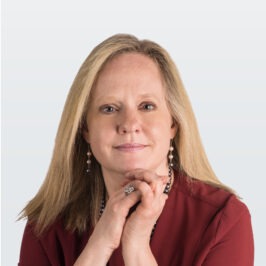
Tim Riddiough Timothy Riddiough
Real Estate and Urban Land Economics
Ph.D. Faculty Coordinator

Biography: Timothy (Tim) Riddiough holds the E.J. Plesko Chair and is a professor in the Department of Real Estate and Urban Land Economics at the Wisconsin School of Business. Riddiough served as the director of the Graaskamp Center for Real Estate from 2004-2009. From 1994 to 2001 Riddiough was at MIT as an assistant and associate tenured professor, and from 1991 to 1994 he was an assistant professor at the University of Cincinnati. His honors and awards include winning the best dissertation and best paper awards from AREUEA, being named a founding fellow at the Real Estate Research Institute, and a fellow at the Homer Hoyt Institute for Advanced Studies. Riddiough is best known for his work on credit risk in mortgage lending, mortgage securitization, real options, REIT investment and corporate finance, and land use regulation. He has published in Real Estate Economics, Journal of Urban Economics, Journal of Real Estate Finance and Economics, Review of Financial Studies, Journal of Quantitative Financial Analysis, and the Journal of Financial Intermediation. His current research interests are focused on the financial crisis of 2007-08, economic development of debt markets, and optimal contract design. Riddoiugh is an active participant in the commercial real estate industry, speaking often on the financial crisis, and was recently named to NAREIT’s investment advisory council. He is also active with the Pension Real Estate Association and the Commercial Mortgage Securities Association. He advises several real estate organizations on investment and risk management issues, and has served as an expert economic consultant on numerous legal matters involving real estate finance and investment issues. He received his Ph.D. from the University of Wisconsin–Madison. He holds the Counselor of Real Estate (CRE) designation.

Beyond the classroom:

  • Riddiough is currently the second vice president of the American Real Estate and Urban Economics Association (AREUEA). He has been active in AREUEA for many years, serving on the board of directors several times.
  • He is on the editorial board of Real Estate Economics, and I for several years served as editor of Real Estate Finance. He currently serves on the editorial boards of five other real estate-related journals.